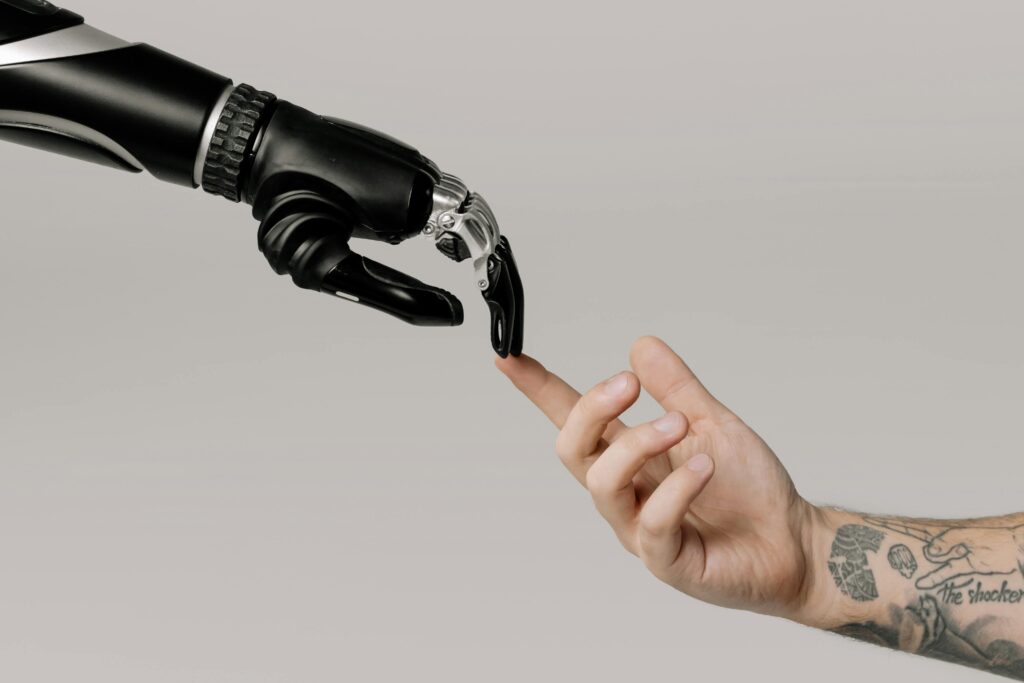
🤔 What if your next HR team member isn’t human at all?
Imagine an AI-driven “colleague” that not only analyzes workforce data but also takes action on it. That’s the promise of agentic AI in people analytics – a technology shift that’s quickly moving from buzzword to business priority (Erinn Tarpey@beamery.com). For CHROs and business leaders, this is a provocative new frontier: autonomous AI agents that can streamline HR processes and even reimagine how decisions are made.
Gartner forecasts that by 2028, one-third of enterprise software will include agentic AI, making up to 15% of day-to-day decisions autonomous. And this isn’t just theory: across industries, AI agents are already making their mark, from helping hospitals manage patient admissions to optimizing inventory for retailers.
🤖 What Is Agentic AI in HR? (And How Is It Different?)
Agentic AI refers to AI systems designed to operate with a high degree of autonomy in pursuit of a goal(hrexecutive.com). In plain terms, these are AI “agents” that don’t just provide insights or chat responses. They can perceive context, make decisions, take actions, and continuously learn from the outcomes. This sets them apart from earlier HR tech tools. Remember the progression: predictive analytics forecasts outcomes, generative AI creates content, but agentic AI actually executes tasks on our behalf.
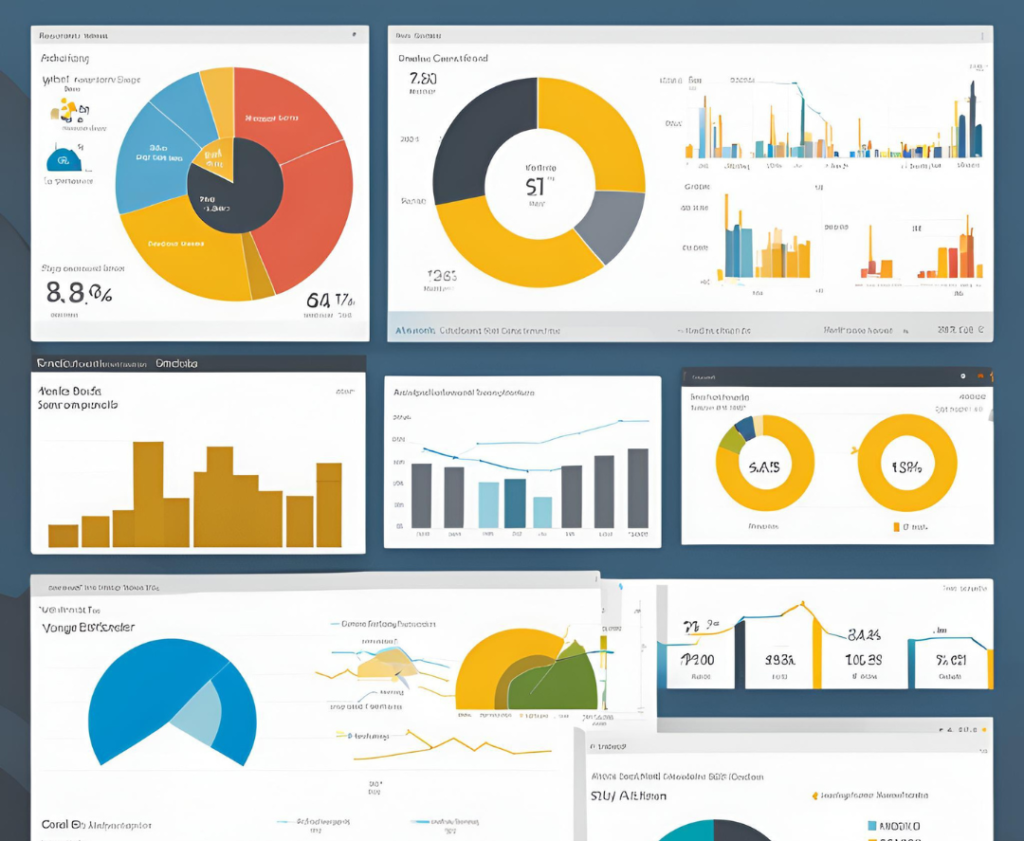
📊 From Insight to Action: Why It Matters in People Analytics
Traditional people analytics focuses on deriving insights. For instance, identifying a rising attrition risk or a skill gap in the organization.
The game-changer with agentic AI is that it doesn’t stop at insight. It can act on those insights automatically, closing the loop between analysis and execution.
Imagine the system detects a critical talent gap; an agentic AI could immediately recommend a mix of internal promotions, new hires, or upskilling initiatives to address it, all without waiting for a human analyst to ask. In this way, agentic AI turbocharges people analytics by ensuring insights lead to timely action.
It’s no surprise many experts consider agentic AI one of the most significant advancements in HR technology in recent years (if it lives up to the hype). The value proposition is compelling. According to HR tech leaders (hrexecutive.com), agentic AI can deliver:
- ⏱️ Time savings: Automating not only routine but also complex HR tasks.
- 📊 Consistency: Enforcing standardized processes and reducing human error.
- 📈 Scalability: Handling growing workloads without proportional increases in HR headcount.
- 🔎 Data-driven decisions: learning from outcomes and patterns to improve over time.
Real-world results are already validating these benefits. IBM, for example, deployed an AI agent in its HR service center that now resolves over 10 million employee inquiries a year, saving about 50,000 hours of work and $5 million annually, all while boosting HR’s service satisfaction ratings. In other words, agentic AI isn’t just about cool tech – it’s about tangible business impact, from cost savings to happier employees.
🚀 Key Use Cases: How Agentic AI Is Transforming HR (Across Industries)
📊 Workforce Planning & People Analytics:
An AI agent can continuously analyze data on skills, performance, and market trends to spot emerging gaps or opportunities. If a new strategic initiative is announced, the AI could identify a shortage of certain skills and automatically recommend a plan e.g. suggesting which employees to upskill, which roles to recruit for, and even adjusting role definitions to meet future needs (beamery.com).
-
- In practice, this might mean an AI agent detects that your sales team lacks expertise in a new product line and promptly kicks off a hiring process or training program to fill that gap;
- a manufacturer might use agents to predict labor needs and schedule staff.
🤖 Talent Acquisition & Recruitment:
AI agents can streamline nearly every stage of hiring. For instance, Workday’s new AI-driven Recruiter Agent automates sourcing by scouring databases for candidates and recommending top talent, even engaging passive candidates via integrated platforms.
👐 Onboarding & Employee Experience:
Imagine a new hire’s paperwork, IT setup, and training schedule all being arranged by an AI assistant. The agentic systems can send welcome emails, request equipment, set up accounts, and schedule orientation sessions automatically (hrci.org). These agents also serve as 24/7 HR concierges for employees, providing real-time answers to questions about policies or benefits.
🎯 Performance Management & Development:
Agentic AI can monitor performance data continuously, alert managers to trends, and even draft personalized development plans. IBM has a “digital HR worker” that assists with quarterly promotions – automating the gathering and formatting of performance data for 17,000 employees.
💡 Engagement & Retention:
Agentic AI can track engagement signals: survey responses, sentiment analysis, collaboration patterns, and trigger retention actions autonomously. It might send manager alerts, trigger targeted pulse surveys, or suggest interventions before disengagement suspicions become turnover incidents. HR can intervene in critical moments guided by AI-driven alerts.
⚖️ Challenges to Consider
With all the excitement around agentic AI, CHROs should be aware that agentic AI brings both opportunities and new responsibilities
- Not “set and forget”: The more autonomy an agent has, the higher the risk of unintended consequences (e.g., misreading ambiguous policies, accidentally exposing data, or making scheduling errors).
- Keep humans in the loop: Sensitive or high-impact decisions still require human oversight and clear boundaries on what agents can and cannot do.
- Govern the “digital workforce”: HR must create policies for managing AI agents across their lifecycle — deployment, training, monitoring, and retirement.
- Ensure ethics and transparency: Guard against bias, privacy breaches, and explainability gaps in decisions like hiring or promotion.
- Adopt a partnership model: Let AI handle data and process tasks, while humans provide context, empathy, and final judgment.
- Build new HR capabilities: People Analytics and HR professionals will evolve into AI supervisors and ethicists, ensuring responsible, trusted use of the technology.
Bottom line: Agentic AI should augment, not replace, human decision-making — and only careful governance will preserve trust in both AI and HR.
📩 Want to stay ahead of the curve?
If you found this useful, subscribe to my People Analytics Insider newsletter for:
- Exclusive case studies (like the bias audit we did for a Fortune 500 company)
- Templates (data governance checklist, HR metrics guide)
- Deep dives on turning analytics into action
🚀 Ready to upgrade your people analytics in your firm? Let’s check out the HR metrics you should be tracking